If You Have Had Spinal Meningitis Can You Get It Again
Bacterial Meningitis
What is bacterial meningitis?
Meningitis is an infection of the membranes (meninges) that protect the spinal cord and brain. When the membranes become infected, they corking and printing on the spinal cord or brain. This can cause life-threatening problems. Meningitis symptoms strike of a sudden and worsen quickly.
What causes bacterial meningitis?
Bacteria or a virus can cause meningitis. Viral meningitis is more common, merely bacterial meningitis is more serious. It tin lead to brain harm, paralysis, or stroke. In some cases, it can be fatal.
Many different types of leaner can crusade meningitis. Vaccines are bachelor that target many of these leaner. For this reason, it's important to know what's causing meningitis. Even though all types impact the aforementioned surface area of the trunk, they can take different outcomes and need unlike treatments.
What are the risk factors for bacterial meningitis?
Experts don't e'er know why meningitis happens. Some people go information technology when their immune organization is weak or they've recently been sick. A head injury may also increase risk.
Bacterial meningitis is more common in infants under 1 year of age and people ages 16 to 21. College students living in dorms or other close quarters are at increased risk. Also at risk are adults with sure medical problems, including those without a spleen.
What are the symptoms of bacterial meningitis?
The well-nigh common symptoms of bacterial meningitis are:
- Painful, stiff neck with limited range of motion
- Headaches
- Loftier fever
- Feeling confused or sleepy
- Bruising hands all over the body
- A rash on the peel
- Sensitivity to light
These are symptoms to look for in children:
- Irritability
- Vomiting from a high fever
- Frequent crying
- Swelling of the caput
- Lack of appetite
- Seizures (sometimes besides seen in adults if the meningitis is advanced)
Symptoms typically come on quickly, in every bit petty as a couple of hours or up to a day or two. If you lot think you or your kid may have meningitis, go to an emergency room right away.
How is bacterial meningitis diagnosed?
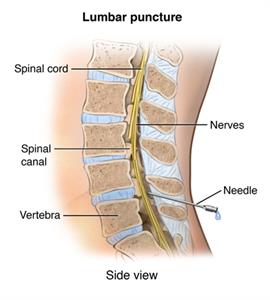
To diagnose this status, a healthcare provider will exercise a spinal tap (besides called a lumbar puncture) to have a sample of fluid from around the spinal cord. The fluid is and then tested for leaner. The healthcare provider will also ask well-nigh your symptoms and do a physical exam.
Other tests may include:
- Brain imaging (CT scan)
- Claret and urine testing
- Swab of fluids from your nose or throat
How is bacterial meningitis treated?
Prompt treatment of bacterial meningitis is crucial. It can save your life. Once the blazon of bacteria has been identified, you'll start taking antibiotics.
Antibiotics are given through a needle placed into a vein (usually in the arm or hand). They may too exist given forth with a corticosteroid to help reduce inflammation and swelling. Treatment too includes enough of fluids to prevent dehydration.
What are the complications of bacterial meningitis?
With quick treatment, many people with bacterial meningitis don't have any permanent problems. Nonetheless, even with prompt treatment, some may battle seizures, brain damage, hearing loss, and inability for the remainder of their lives. Meningitis can be fatal and some people with this infection will die.
Can bacterial meningitis exist prevented?
Vaccines are bachelor to help prevent bacterial meningitis. Children now routinely get a meningitis vaccine around ages 11 to 12. A booster shot is given at age sixteen. Inquire your healthcare provider if you or your children should be vaccinated.
Bacterial meningitis is contagious. If you've been around someone who has it, call your healthcare provider to talk most how to proceed from getting sick.
Fundamental points near bacterial meningitis
- If y'all experience like you've got the influenza with unusual stiffness in your neck, it could be meningitis.
- Get whatever symptoms checked out and treated equally soon as possible to aid ward off complications.
- Ask your healthcare provider virtually vaccines that may protect you from bacterial meningitis.
- If you lot've been around someone who has bacterial meningitis, call your healthcare provider to talk about how to keep from getting ill.
Side by side steps
Tips to help you get the virtually from a visit to your healthcare provider:
- Know the reason for your visit and what you want to happen.
- Before your visit, write downwardly questions you want answered.
- Bring someone with you lot to aid you ask questions and remember what your provider tells you.
- At the visit, write down the proper noun of a new diagnosis, and any new medicines, treatments, or tests. Too write down any new instructions your provider gives you.
- Know why a new medicine or treatment is prescribed, and how information technology will help you. Also know what the side furnishings are.
- Ask if your condition can exist treated in other means.
- Know why a test or procedure is recommended and what the results could mean.
- Know what to expect if yous do not accept the medicine or have the test or procedure.
- If yous accept a follow-upwardly appointment, write downwards the date, time, and purpose for that visit.
Know how you can contact your provider if you have questions.
Source: https://www.hopkinsmedicine.org/health/conditions-and-diseases/bacterial-meningitis
0 Response to "If You Have Had Spinal Meningitis Can You Get It Again"
Post a Comment