How to pretend you're in Tokyo: Movies, music and food that transport
Advert
Travel
How to pretend you're in Tokyo: Movies, music and food that ship
That Tokyo trip will have to wait for the millions of people who cancelled flights and hotel bookings. But there are ways to bring you closer to this sometimes impenetrable, ever fascinating urban center.
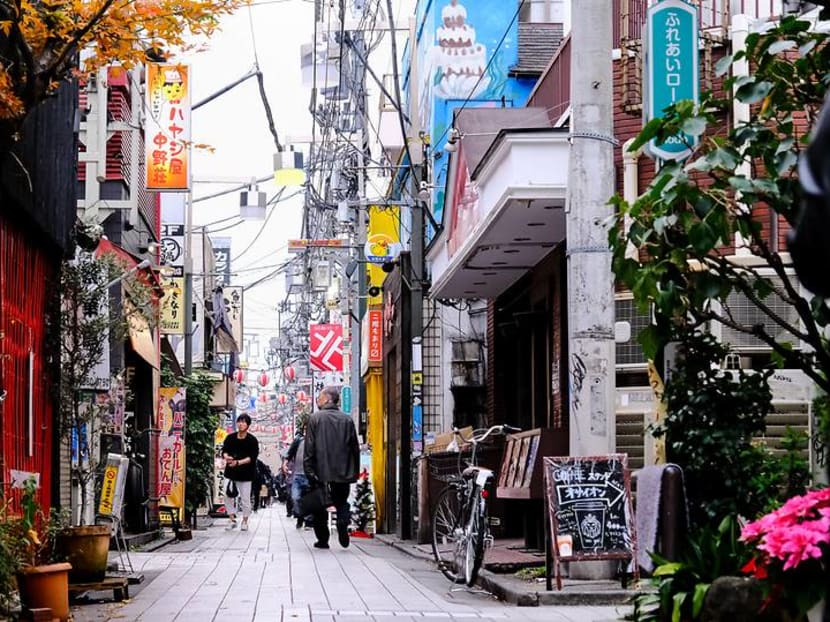
(Photo: Noriko Hayashi for The New York Times)
A few years ago, I walked through Tokyo'southward neon-lit streets for the first time, wide-eyed and jet-lagged.
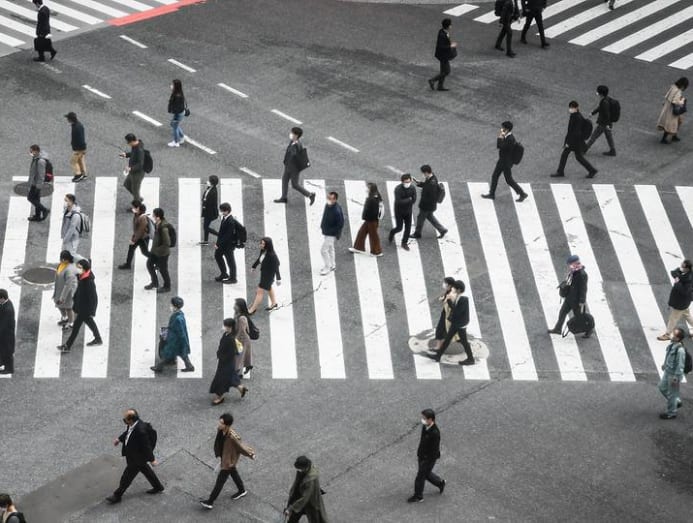
It only took iii days to acquire some of the city's secrets. If yous can't detect the perfect noodle store for lunch, for instance, look up and yous will see another dozen options, filling the upper floors of what y'all thought were part buildings. Or that famous places – like Shibuya Crossing, the intersection you've seen in 100 timelapses – are famous for a reason, but at that place's so much more to larn by picking a metro stop at random and going for a long walk.
This was supposed to be a large year for tourism for the city – already one of the globe's virtually visited – equally it was prepare to host the now-postponed Olympics and Paralympic Games. That, of course, did non happen.
With most of the world however confined to their homes, that Tokyo trip will have to wait for the millions of people who cancelled flights and hotel bookings. In the meantime, in that location are means to capture the spirit of a sometimes impenetrable, always fascinating, city. Perhaps, just for a night, these recommendations might even make you feel like you are in that location.
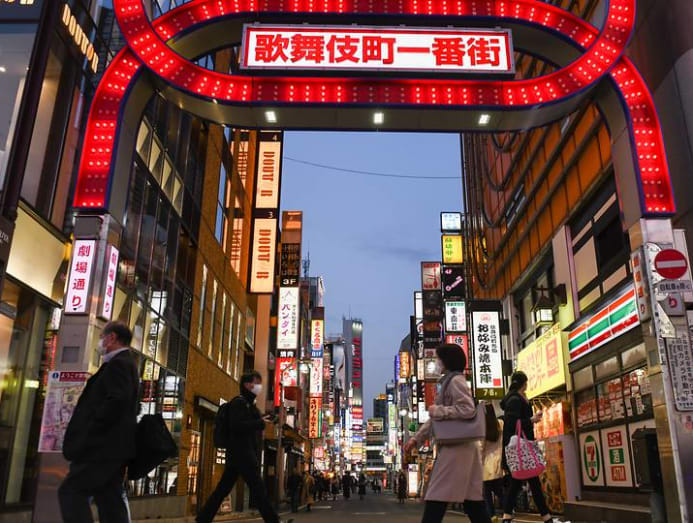
HEAR THE CITY
I start met Kazuto Okawa, who performs under the proper noun LLLL, outside a convenience store in the quirky neighbourhood of Koenji on my beginning night in Tokyo. He was sitting on a curb in a circumvolve of friends, his face obscured by long, disheveled hair. Over the years since that starting time see, his music – a blend of sugary pop hooks and space-historic period soundscapes – has become synonymous with the urban center for me. If those conflicting feelings of disorientation and joy that hit every visitor to Tokyo could be translated to audio, this would be information technology.
When I asked Mr Okawa what music best captures his home metropolis, he directed me to the classics. The musician Keigo Oyamada, ameliorate known equally Cornelius, is sometimes reductively chosen the "Japanese Beck" for the way he swoops between genres with ease. Every album is a journey, just for the most evocative of the city, Mr Okawa suggests his 1995 album "69/96." "It'south forever futuristic," he said. "A perfect match to Tokyo."
If Cornelius is as well out in that location for you, Mr Okawa recommends "Kazemachi Roman" by Tokyo folk rock pioneers Happy End: You may recognise a song from the soundtrack to that cracking tribute to Tokyo, Lost in Translation.
To begin understanding the phenomenon that is Tokyo's J-pop scene, Mr Okawa says to start with Sheena Ringo's "Kabukicho no joou." "Information technology captures the dark side of the city," he said. "And information technology happens to be 1 of the most pop J-pop songs of all time." For the flip side of the same popular coin – perhaps information technology'southward a more than lively summer dark you are trying to recreate – he recommends Taeko Ohnuki'southward aptly titled "Sunshower."
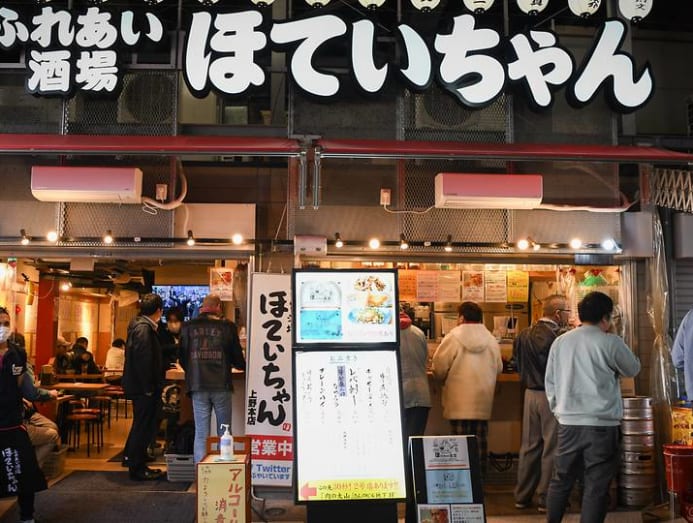
COOK AT THE DINNER TABLE
No trip to Tokyo is complete without a whole lot of eating. While it may be hard to accurately recreate a bona fide Tokyo bowl of ramen or plate of sushi, at that place is enough that you tin do from home.
Caput to New York Times Cooking for a selection of quick and easy dishes, from yakitori (yes, you actually tin can make it at home) to nori chips (perfect with a cold Japanese lager).
For something more involved, and seasonally appropriate, follow the lead of Motoko Rich, The Times' Tokyo bureau chief. "With the atmospheric condition getting cooler, it'southward time to interruption out the butane burner for shabu shabu, a classic Japanese dinner that y'all can make and swallow right at the table," she said.
First, make a kombu dashi, a broth flavoured with stale kelp, then take beef, tofu, vegetables and mushrooms and dip them into the bubbling liquid, making sure to swirl in the ingredients long plenty that they cook through. "Although we can melt shabu shabu at home, it besides reminds me of fancier mid-20th century-era restaurants in Tokyo, where the servers clothing kimonos and bear regal platters to the tables."
Expand YOUR LITERARY HORIZONS
If you lot want to lose yourself in Tokyo by curling upward with a good book, nosotros have plenty of recommendations, whether information technology is a long work of fiction yous are after or more than snackable short stories. There is more – a lot more – than Haruki Murakami. Ms Rich recommends Breasts And Eggs past Mieko Kawakami. "I dearest the style Kawakami references real and recognisable, but not exoticised, Tokyo locations," she said. "You experience in the know, reading it, rather than as if y'all are beingness introduced to a precious Other World. It is Tokyo equally information technology is lived in, non a film set."
Come across THE Metropolis ON THE SCREEN
If an evening of Television and subtitles is what you are after, start with the binge-worthy Midnight Diner: Tokyo Stories on Netflix. The show is about the customers who laissez passer through a tiny counter-service eatery that is merely open from midnight to 6am. At turns heartwarming, hilarious and melancholic, it is a moving portrait of Tokyo after dark. If the opening championship sequence doesn't make yous feel good, check your pulse: It is ASMR for the soul.
When information technology comes to movies, equally Mike Hale, a Times' television critic, said, "Tokyo is simultaneously the well-nigh cosmopolitan and the virtually intensely local urban center yous tin imagine, and that's a perfect combination for storytelling, as directors from Kurosawa to Kiarostami to Sofia Coppola accept shown."
Where to start so? You can't skip Akira Kurosawa, the influential filmmaker whose career spanned almost six decades. Mr Hale recommends Stray Canis familiaris (1949), shot in Tokyo in the backwash of World State of war Two. He describes it as "a walking tour of the urban center in sheer survival manner."
Next, attempt Tokyo Drifter (1966) by Seijun Suzuki. "Suzuki's stylised yakuza story sets traditional themes of honour and corruption against a jazzy, jagged, surrealist distillation of the speedily changing metropolis," he said.
Finally, for something more contemporary, spotter the Cannes Palm d'Or-winning Shoplifters (2018) by Hirokazu Kore-eda. In Mr Hale's view, the film, about a family of grifters, "shows both the glittering modernistic metropolis and the shadow earth only beyond the neon."
GET LOST IN THE VIRTUAL World
While Japan's near internationally famous video gaming effigy may be an Italian plumber with a taste for mushrooms, at that place are besides plenty of games more grounded in existent-life Tokyo than Super Mario Bros. Brian Ashcraft, an Osaka-based senior writer at the gaming website Kotaku, recommends the expansive Yakuza series, which follows Kazuma Kiryu as he makes his proper noun in the underworld. The Yakuza games are activity-packed, just with dance battles, karaoke sessions and laugh-out-loud dialogue, they are also unabashedly giddy. "This year has resulted in all events and trips to Tokyo being canned," Mr Ashcraft said. "The Yakuza games exercise a fantastic job of bringing parts of the city to life. These obsessive, digital recreations mimic the idea of Tokyo. For me, that'due south good enough."
By Sebastian Modak © 2022 The New York Times

Recent Searches
Trending Topics
Source: https://cnalifestyle.channelnewsasia.com/travel/how-to-pretend-you-re-in-tokyo-movies-music-food-250201
0 Response to "How to pretend you're in Tokyo: Movies, music and food that transport"
Post a Comment